Reset

Back to Journal

Written by Reset Type Studio | 30-01-2026

MacroSans: case study

Collaborated with Pentagram on the design and development of a custom typeface for Macrofactor, a science-based health and fitness app.

A new identity for MacroFactor that frames science as both exacting and human. Inspired Science is less a slogan than a tension: rigorous and empathetic, motivating and methodical. This idea crystallizes in the mission Empower Every Body, turning evidence into possibility—making strength, confidence, and insight accessible to all. And it expands into a vision: The whole MF World—a playful shorthand that signals both the scale of ambition and the community spirit at the heart of MacroFactor
 

In the ecosystem of nutrition apps, most products trade on convenience or aspiration: they count calories, gamify habits, or stage lifestyle fantasies. These technologies often feel disposable to dedicated gym-goers and disciplined athletes—too lightweight to match their rigor. MacroFactor is built for people who want to get serious about their bodies—whether that means losing weight, gaining muscle, or simply building healthier habits. Developed by scientists, coaches, and engineers, the app turns adaptive algorithms into practical guidance, delivering precision that users can trust. Its proposition is simple and direct: knowledge creates clarity, and clarity creates progress. But clarity alone doesn’t make a brand. Numbers require narratives; data needs design”. 


Pentagram

Project: Custom Font

Client: Pentagram, NY

Year: 2025

THE TYPEFACE
 

We were invited to help develop a custom font that already had a strong foundation. Working closely with Pentagram’s team, we refined, expanded (literally) and engineered it into an adaptable, playful, and professional type family. In their own words:


“The design system is where precision and adaptability are brought to life. At its core is MacroSans, a custom variable typeface designed to embody the brand’s dual character: architectural in structure yet fluid in application. With its wide range of weights and widths, MacroSans adapts effortlessly across interfaces, editorial, and motion—an essential tool for a brand that thrives on flexibility.”


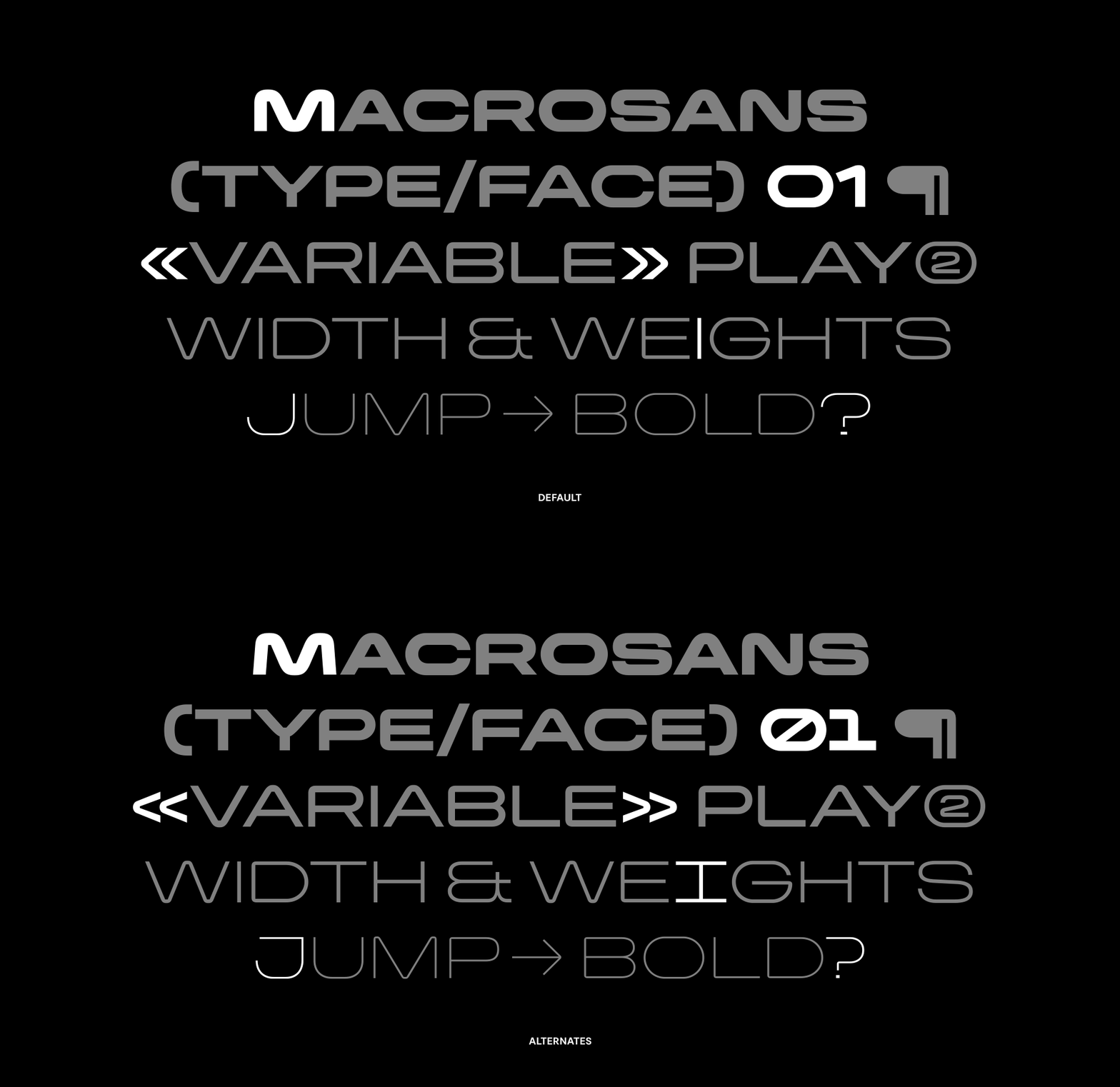
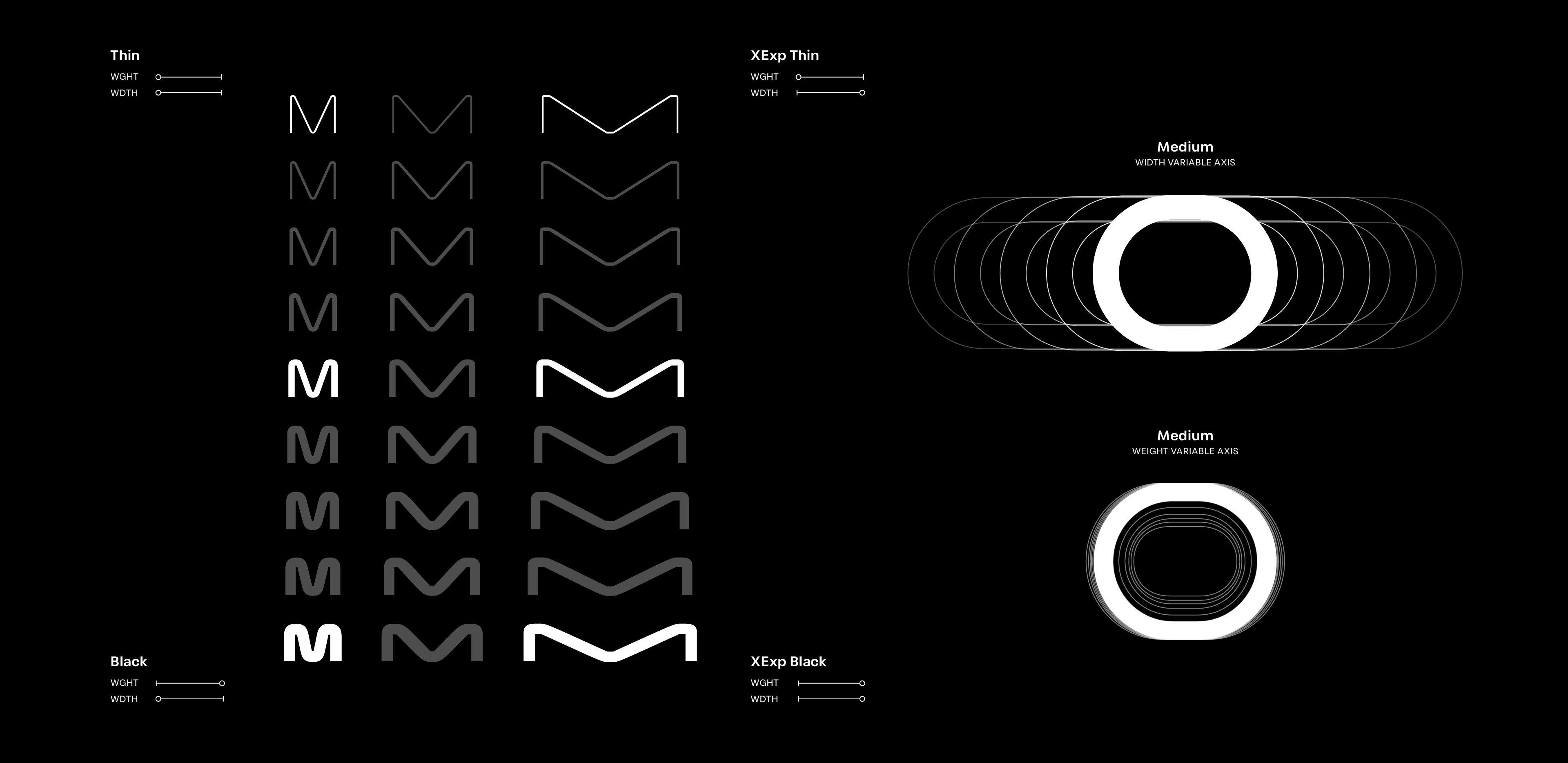
We expanded the original single-style font into a full variable family with two axes and 27 styles. The character set was significantly extended to over 740 glyphs per weight, providing support for more than 160 Latin-based languages. The family also includes a wide range of functional glyphs, such as diacritics, alternates, mathematical symbols, superiors and inferiors, arrows, and circled numbers.

STYLES & CHALLENGES


Across its different styles, a number of challenges make this project a distinctive case. Both drawing and interpolation were carefully designed to build a multi-style family that functions as a versatile graphic resource, capable of addressing a wide range of design scenarios while also enabling text animation, a key aspect that reinforces and amplifies the brand’s core concepts.

DRAWING


The typeface is built from six masters: Thin, Regular, Black, XExp Thin, XExp Regular, and XExp Black. These masters allowed us to control each stage of interpolation while defining, together with the client, the specific instances needed to meet the brand’s design requirements.


Weight progression was handled optically, while width expansion was approached mathematically. This combination resulted in a typeface that aligns with established weight-scale standards, while maintaining consistent width variations. Such consistency enables smooth animations and gives users precise control over animated transitions, without the type design itself disrupting the visual progression.
ANIMATION VS. STATIC

 
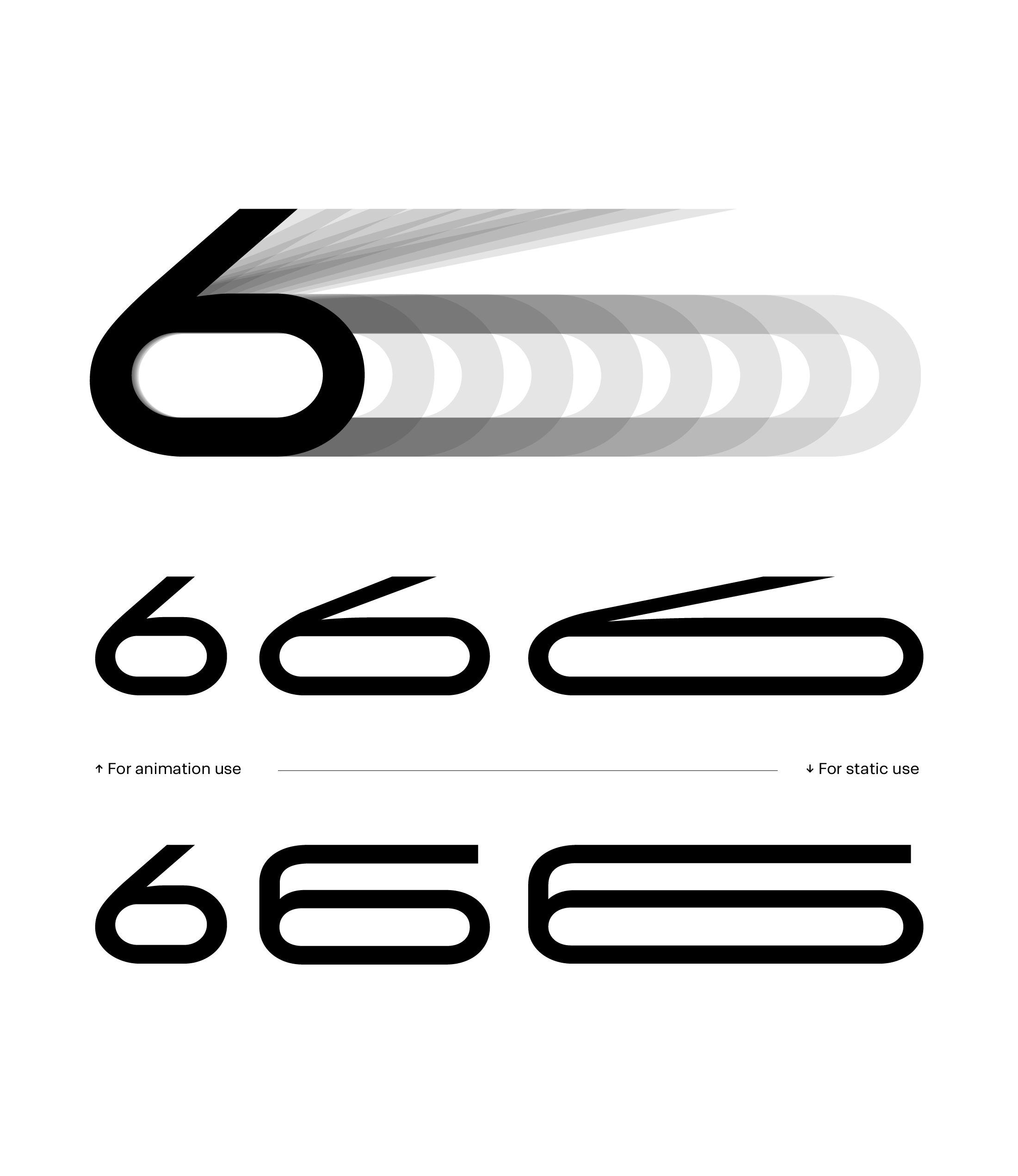
The family was designed to support, and adapt to, two distinct modes of use: static and animated. For static text, the focus was placed on the structure of the glyphs, prioritizing clarity and performance in context while adding value to the overall visual language. For animated text, however, structures were kept consistent throughout the entire interpolation space (both weight and width), ensuring fluid motion without visual jumps or unexpected shifts in form.
 
As a result, the family includes two stylistic sets: one intended for static text (ss01), and another designed exclusively for animation (the default set).


INTERPOLATION

 
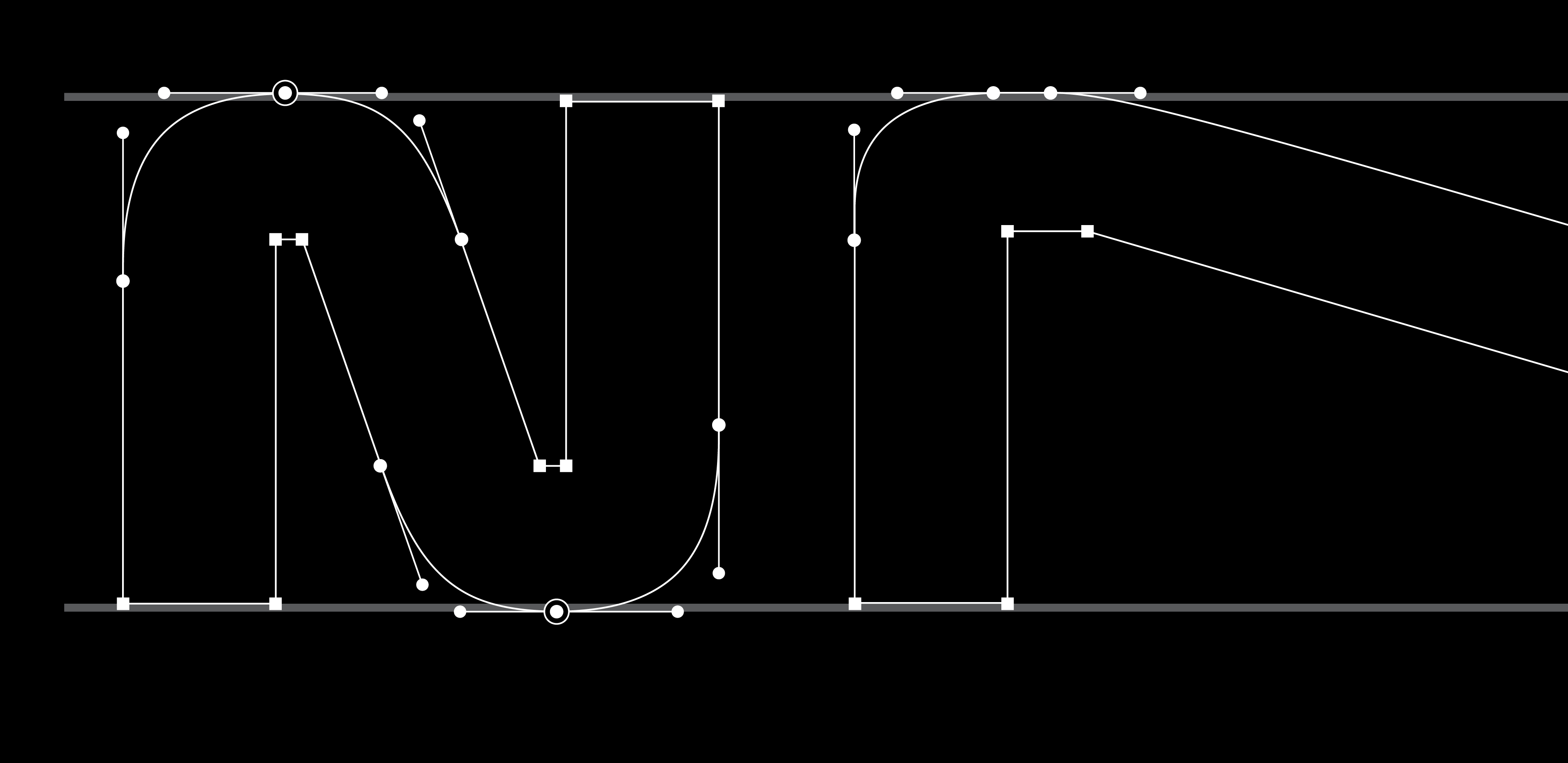
To achieve smooth interpolation across all instances of the typeface, while preserving curve tension and maintaining the core identity of the forms, we focused carefully on the relationships between the control points of each master. This approach ensured continuity and consistency throughout the variable space, allowing the typeface to perform reliably across both static and dynamic applications.

STYLISTIC ALTERNATES

 
The family also includes a variety of stylistic alternates, covering: letters, numerals, punctuation, and diacritics. Designed specifically to optimize spacing and relationships between glyphs. This gives users the flexibility to choose the most appropriate form depending on context and composition.

IN USE

CREDITS:

Client: Pentagram, New York
Partner: Natasha Jen
Project team: Natasha Jen, Whitney Badge, Xiaokang Li, Justin Zhang, Drithi Kandoor, Jin Chun, Jennifer Bahng, Harry Adams.
Collaborators: Kyle Barron-Cohen (strategy), Eva Green (strategy), Edgar Ferrer (motion design), Jaison Lin (merch photography).
Images: Pentagram (except for the technical images)
Back to Journal